Cervicogenic Headache: When a Headache Starts in the Neck

A lot of the headaches I see in my chiropractic clinic start as a stiff neck. A patient may describe pain that begins at the base of the skull, often on one side and it spreads up towards their eye or temple. They have probably tried painkillers, maybe blamed it on stress or screen time and are surprised when I ask about their neck rather than their head.

This neck pattern has a name: cervicogenic headache, a headache caused by a problem in the cervical spine of the neck rather than the head itself. It is a common headache type that I treat and one of the headaches that is helped by hands-on chiropractic care. This is because, unlike migraine or tension-type headache, the source of it is a joint and muscle problem that I can examine directly in the neck.

Diagnosing which type of headache you have is important because the advice for a headache coming from the neck is different to the advice that I give for migraines.
“Would highly recommend Leslie to all of my family and friends to go see him”

“I went to see Leslie Budzynski with shoulder pain and headaches. After a few treatments my headaches improved and shoulder pain is getting better. Would highly recommend Leslie to all of my family and friends to go see him if you have any problems.”

Deanne O

What is cervicogenic headache?

Cervicogenic headache is a secondary headache. This means it is caused by another problem rather than being a headache disorder in its own right.[1] The pain originates in the joints, discs, muscles or ligaments of the upper neck, typically the top three cervical vertebrae and is then the pain itself is felt in the head. This happens because the nerves supplying the upper neck share a pathway in the spinal cord with the nerves supplying the face and scalp, a phenomenon called convergence. The brain struggles to tell the two apart so pain starting in the neck is perceived as pain in the head.

Doctors have used formal diagnostic criteria for cervicogenic headache since the 1990s, most recently the classification set out by the International Headache Society.[2] These require evidence that the headache is linked to the neck, not just neck stiffness that happens to accompany an unrelated headache, a distinction that matters because a stiff neck is common in migraine too.

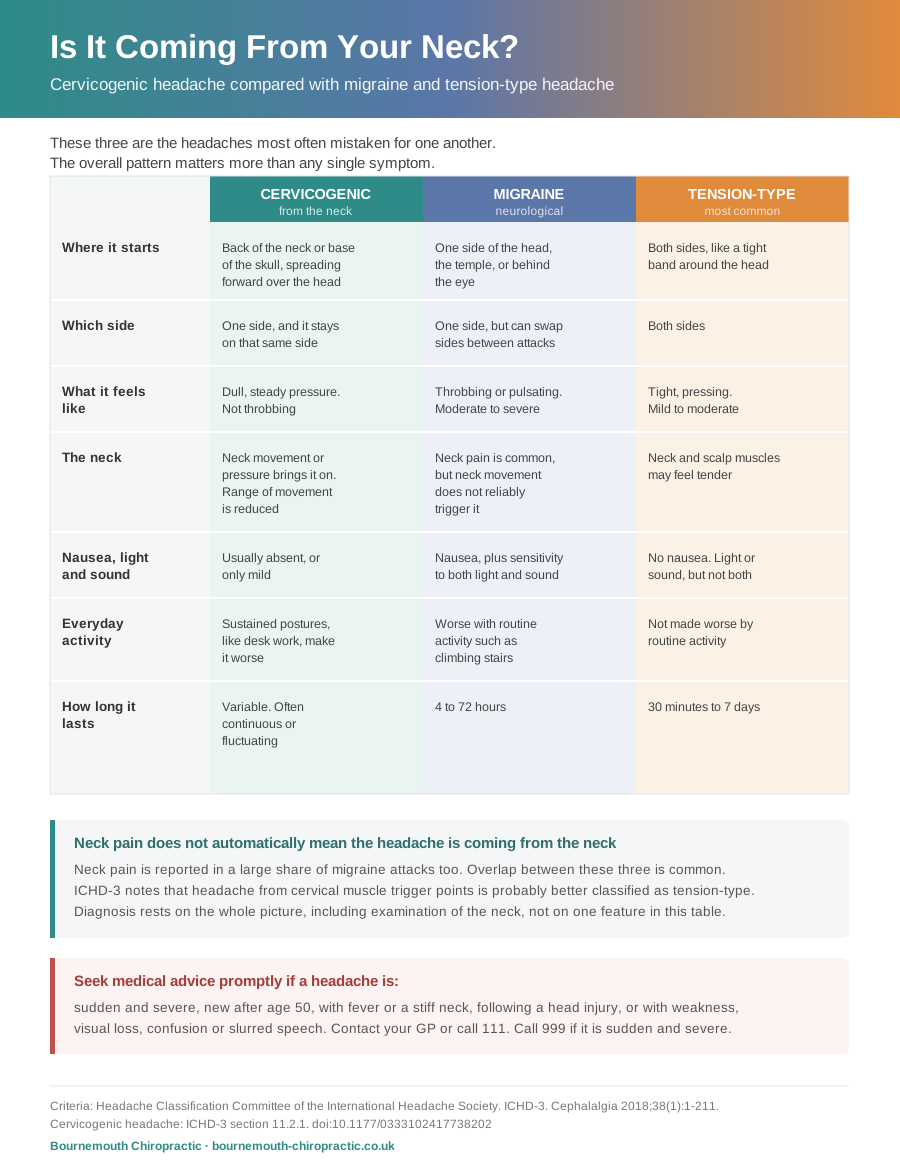
a comparison of cerviocogenic headache symptoms to migraine attacks abd tension typw headaches

What Causes this type of headache

The most frequent cause of a cervicogenic neck related headache that I see is dysfunction in the small facet joints of the upper three cervical vertebrae in the neck. Often this type of headache follows prolonged poor posture, an old whiplash injury or years of desk work. Prolonged phone and screen use, particularly looking down at your phone, keeps these joints in one position for hours and can be one of the more common triggers. Alongside these causes, there are the trials and tribulations of travelling which can be surprising disruptors and causes of pain.

Muscle tension in the sub-occipital muscles at the base of the skull plays a role as well, either as a cause or a response to joint irritation. Degenerative change such as early spondylosis in the neck can also contribute, particularly over the age of 40. These types of headaches are rarely just caused by one thing; most patients have a combination of joint restriction, muscle tightness and a postural habit that keeps re-aggravating it.

Specific symptoms of cervicogenic headaches

Patients usually describe cervicogenic headaches as a one-sided headache that starts at the base of the skull and spreads forward towards the forehead, temple or behind the eye. It is typically a steady, aching pain rather than the throbbing quality more often reported with migraine. Neck stiffness on the same side is common and the headache is often brought on or worsened by particular neck movements, sustained postures such as driving or screen work or pressure over the upper neck.

These factors are one of the clearest ways to tell a cervicogenic headache apart from a migraine. A migraine more often shifts sides, comes with nausea and light or sound sensitivity and worsens with routine activity rather than a specific neck position.[3]

Other types of headache: Tension-type headache tends to feel like a band of pressure around the whole head rather than a one-sided pain starting at the neck. Your neck itself can feel stiff or hard to turn too. It is worth worth reading about the definitions of all types of headaches on my mechanical neck pain information page. Some patients also notice mild dizziness alongside the headache, which can happen when the neck is involved and I have linked the page covering details of this too.

How chiropractic care may help

Treatment for these types of headache usually combines gentle mobilisation or manipulation of the upper cervical joints with soft tissue work on the sub-occipital and upper trapezius muscles, plus exercises to restore normal neck movement. A mobilisation technique called SNAGs, developed for exactly this kind of joint-related headache, has shown some of the more consistent short-term results with benefits that appear to hold up over time.[4]

The wider medical evidence is very encouraging. A 2022 review pooling twenty trials found moderate-to-large short term improvements in headache frequency and intensity, but the overall risk of bias across most trials was high; narrowed to only the better trials, it still showed moderate-quality evidence favouring manipulation over sham treatment.[5] A more recent comparison of manipulation, mobilisation and massage ranked manipulation most effective, though the authors flagged that small sample sizes limit how far that can be generalised.[4]

Most patients notice a change within four to six sessions, depending on how long the problem has been building. Your treatment plan is built around what I find at that first assessment not a standard generalised one applied to everyone with a headache. Treatment is very individual as are the headaches.

If headaches are getting in the way of things you would rather be doing, come and talk it through. I offer a free 15-minute consultation, you can come in for a short no-obligation chat with no examination or treatment.

Book a free consultation

Or call for a chat on 01202 937568

red flags

Most headaches, including cervicogenic ones, are not a sign of anything serious. Some patterns do need a doctor before they need a chiropractor. See your GP urgently, call 111 or go to A&E for a sudden, severe headache unlike any you’ve had before (a “thunderclap” headache), a headache with fever, a stiff neck and a rash, confusion, slurred speech or weakness down one side, a headache following a significant blow to the head or neck or a new headache pattern starting for the first time after age 50.

I’ll also point you back to your GP if a headache is getting steadily worse over days or weeks, wakes you from sleep or comes with visual disturbance that doesn’t settle. These aren’t features of a straightforward cervicogenic headache and if anything in your examination doesn’t fit the pattern, I’ll say so and refer you on rather than starting treatment.

your first visit to Bournemouth Chiropractic

Your first visit starts with a full case history and examination, including where and when the headache starts, what brings it on and whether it follows a particular neck movement or posture. I’ll test the movement and tenderness of the upper cervical joints, check your posture, screen for anything that doesn’t fit a cervicogenic headache pattern, then explain what I’ve found and we will agree a plan before any treatment begins. I suggest a quick read of our helpful FAQ’s page in the meantime.

Frequently Asked Questions

Yes, chiropractic could help you if you have a headache related to your neck. Cervicogenic headache one of the conditions UK chiropractors are permitted to advertise treating because the underlying problem is a joint and muscle issue in the neck. Most patients respond well to manual therapy and postural advice.

Cervicogenic headache usually starts at the base of the skull on one side and is brought on by neck movement or posture. Migraine tends to shift sides and comes with nausea along with light or sound sensitivity and worsens with general activity rather than a specific neck position. The two can overlap, which is why an assessment matters before starting treatment.

Courses of treatment can vary in length. Some patients notice a difference within a handful of sessions, particularly if the headache is closely tied to posture and hasn’t been going on for a long time. Others, especially with a long-standing pattern or a history of whiplash, need a longer course of care. I’ll give you a realistic estimate after your first assessment.

Yes, poor posture is one of the most common causes of headaches. Sitting with your head forward and in a downward position for hours when at a desk or on a phone, keeps the upper neck joints under sustained load. Over time this can irritate the joints and muscles enough to trigger a headache even if your neck doesn’t feel especially painful.

If your headache came on suddenly and severely or is the worst you’ve ever had or comes with fever, a rash, confusion, slurred speech, weakness down one side or vision changes, go to A&E or call 111 rather than booking with me. These aren’t features of a typical cervicogenic headache and need medical assessment first.

Whatever may be behind your neck-related headaches, come and find out

Headaches have a lot of possible causes and the right first step is a proper assessment. If headaches are getting in the way of your day-to-day habits and lifestyle, then I'd happily see you to find out whether chiropractic may help you. During your consultation I will be able to answer your questions.

Neck-related headaches are a very common reason people come through my clinic door here in Bournemouth and Poole.

In many of the cases I see, chiropractic care is a very well-tolerated option worth considering and I'll explain clearly whether it's likely to help in your particular case. If I think you'd be better served by your GP, a specialist or another practitioner, I'll help point you in the right direction. Either way, you'll leave knowing more than when you arrived.

There's no pressure and no obligation, just come in, get assessed and let's find you a way forward.

Call or message, whatever's easiest and we'll take it from there.

References and Further reading

[1] Bogduk N, Govind J. Cervicogenic headache: an assessment of the evidence on clinical diagnosis, invasive tests, and treatment. Lancet Neurol. 2009;8(10):959-968. doi: 10.1016/S1474-4422(09)70209-1

[2] International Headache Society. ICHD-3 Classification, section 11.2.1: Cervicogenic Headache. Available at ichd-3.org

[3] Anarte-Lazo E, Carvalho GF, Schwarz A, Luedtke K, Falla D. Differentiating migraine, cervicogenic headache and asymptomatic individuals based on physical examination findings: a systematic review and meta-analysis. BMC Musculoskeletal Disorders. 2021. doi: 10.1186/s12891-021-04595-w

[4] Ling Y, et al. Comparative safety and efficacy of manual therapy interventions for cervicogenic headache: a systematic review and network meta-analysis. Frontiers in Neurology. 2025;16:1566764. doi: 10.3389/fneur.2025.1566764

[5] Bini P, Hohenschurz-Schmidt D, Masullo V, Pitt D, Draper-Rodi J. The effectiveness of manual and exercise therapy on headache intensity and frequency among patients with cervicogenic headache: a systematic review and meta-analysis. Chiropractic & Manual Therapies. 2022. doi: 10.1186/s12998-022-00459-9

Medical Disclaimer: The information on this website is for general informational purposes only and does not constitute medical advice, nor is it a substitute for diagnosis, treatment, or guidance from a qualified healthcare practitioner. If you have any health concern, please consult your GP or another appropriately qualified clinician. Chiropractic treatment isn’t suitable for everyone. Suitability is assessed at your initial consultation, with referral to another healthcare professional made where appropriate. Treatment outcomes vary between individuals, and no guarantee of results is made or implied.

Practitioner: Leslie Budzynski D.C. | Doctor of Chiropractic | GCC registration: 00043 | BCA membership number: 0072

© 2026 Bournemouth Chiropractic Clinic Ltd. Company number 16589293.
Registered Address Suite 9 Pine Court Business Centre, 36 Gervis Road, Bournemouth, United Kingdom, England, BH1 3DH. Website by 3mil